

Spotting scam calls on a busy floor
October 13, 2026 · Aivynzo team
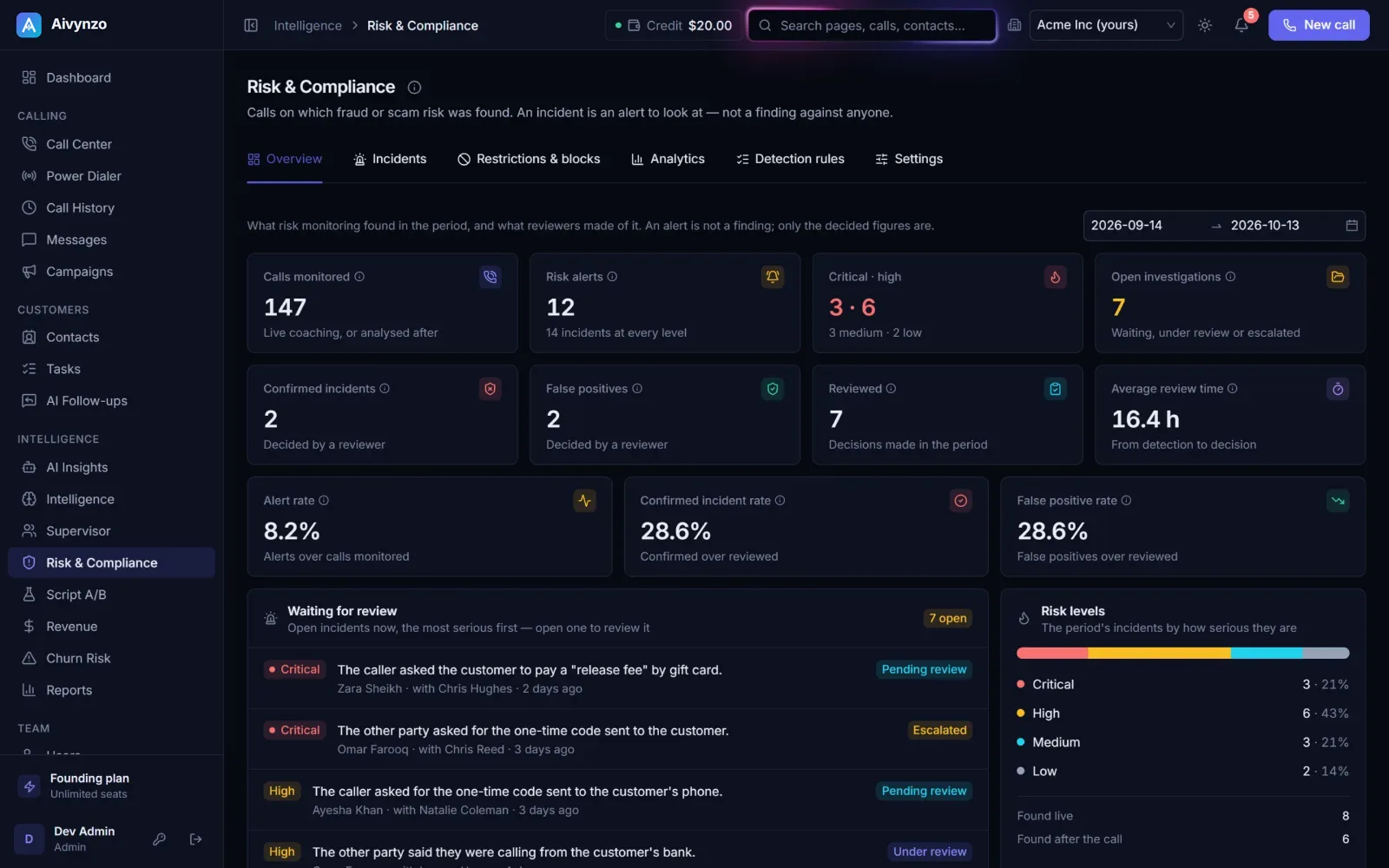
On a floor that makes hundreds of calls a day, nobody can listen to them all. Yet one call where an agent — or someone pretending to be your company — asks for a one-time code can cost a customer their savings and you their trust. The answer is to let software listen for the signs, and let people decide.
The signs to listen for
Most scam calls give themselves away with the same requests:
- One-time codes and passwords — no genuine agent needs them.
- Card numbers and security codes read out over the phone.
- Remote access — asking the customer to install an app or share their screen.
- Urgency and threats — act now, or the account is closed.
- Posing as a bank or an authority to make the request sound official.
Listen during the call and after it
Aivynzo checks calls with a live transcript as they are spoken, and every transcript after the call. It watches for Aivynzo's own list of phrases — in English, Urdu and Roman Urdu — and for any phrases your organization adds.
Evidence, not a verdict
A flagged call comes to your reviewers with a score, the AI's confidence and the sentence that raised it. A reviewer reads the evidence and decides: a real risk, or a false alarm. Only a person can restrict an agent or block a number.
Keep the review fair
An alert is something to look at, not a finding against anyone. Review in order of severity, write down why you decided what you decided, and watch the false-positive rate: if a phrase keeps raising false alarms, change it.