

How to read an AI call summary in two minutes
October 13, 2026 · Aivynzo team
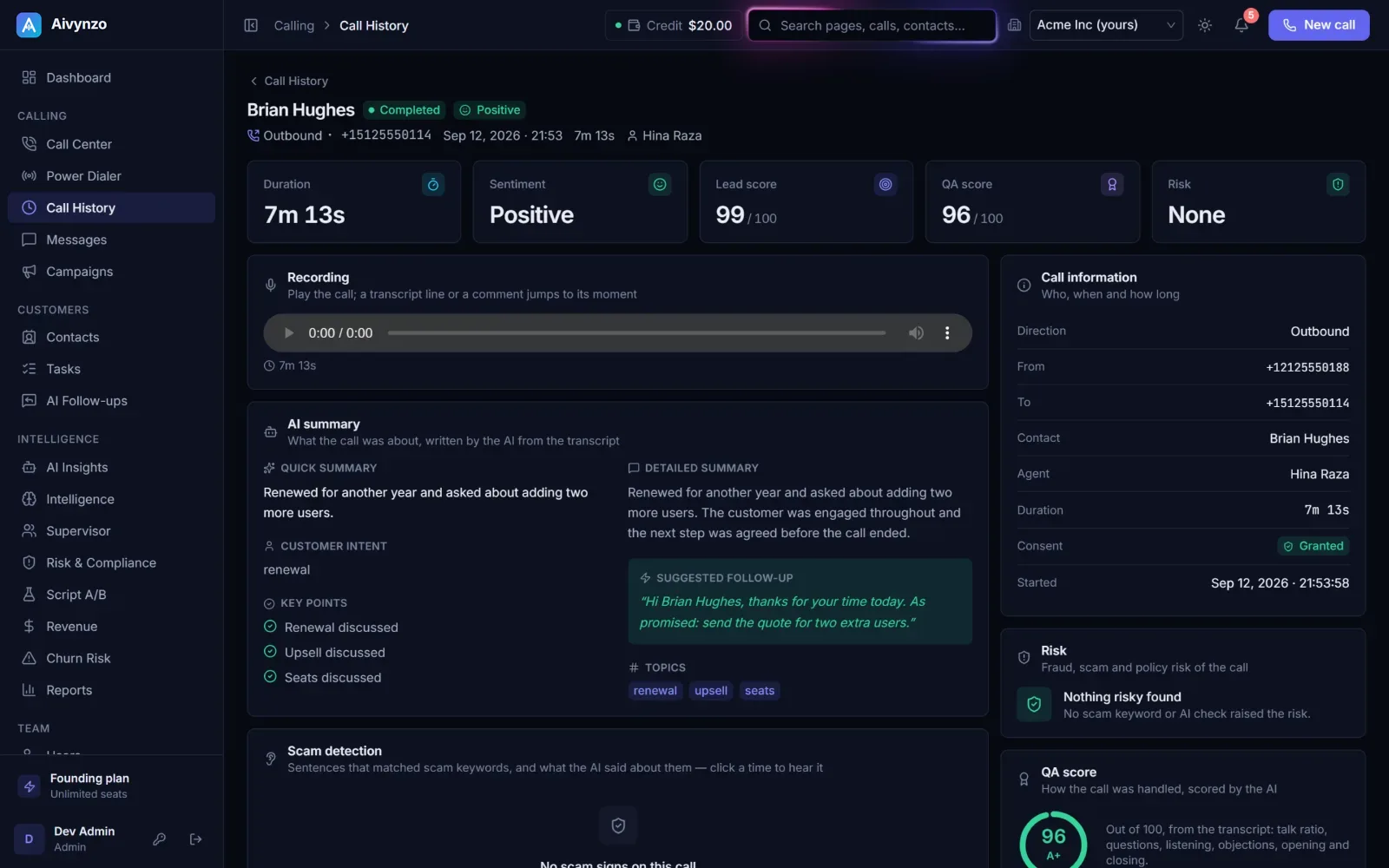
Listening back to a call takes as long as the call did. An AI summary turns the same call into a page you can read while the next one rings. The trick is to read it in the right order — from what matters most to what you can skip.
1. Start with the summary and the sentiment
The summary tells you what the call was about and how it ended, in a few lines. The sentiment tells you how the customer felt — positive, neutral, negative or mixed.
Read them together. A short call with a negative sentiment is worth opening; a long one that ended positive usually is not.
2. Check the lead score
The lead score says how likely the customer is to buy, from what was said on the call. Treat it as a sort order, not a verdict: the hottest leads first, the cold ones when there is time.
In Aivynzo the same score orders the follow-up queue, so the agent who reads the summary and the one who follows up are working from the same list.
3. Read what the customer wants
The AI reads the customer's intent — a demo, the price, support, a renewal — and lists the key points and the topics that came up. This is the part to copy into the next conversation: it is what the customer will expect you to remember.
4. Look at the quality score last
The quality score rates the call itself, skill by skill: the talk ratio, the discovery questions, how objections were handled, listening, the opening and the close. It is for coaching, not for judging one call — look for the same weak skill across an agent's week.
5. Act on the next step
Every summary ends with what to do next: a suggested follow-up and the action items that were promised. Send the follow-up the same day and close the tasks as they are done — that is where a summary pays for itself.
When to open the transcript
Open it when the summary surprises you, when a customer disputes what was said, or when you want the exact words of an objection. The transcript sits beside the summary, so you never have to look for it.