

Follow up the same day: turning promises into tasks
October 13, 2026 · Aivynzo team
A customer asks for a quote, the agent promises to send it, the next call starts — and the quote goes out three days later, or never. The fix is not a better memory. It is a routine where every call ends with its next step already written down.
Write down what was promised, not what was said
A note that says "good call, interested" helps nobody. What helps is the list of promises: send the proposal for twelve seats, call back on Thursday, share the comparison sheet.
Aivynzo's AI reads each call and turns what was promised into tasks — each with a priority and a due date, owned by the agent who made the call.
Draft the follow-up while the call is fresh
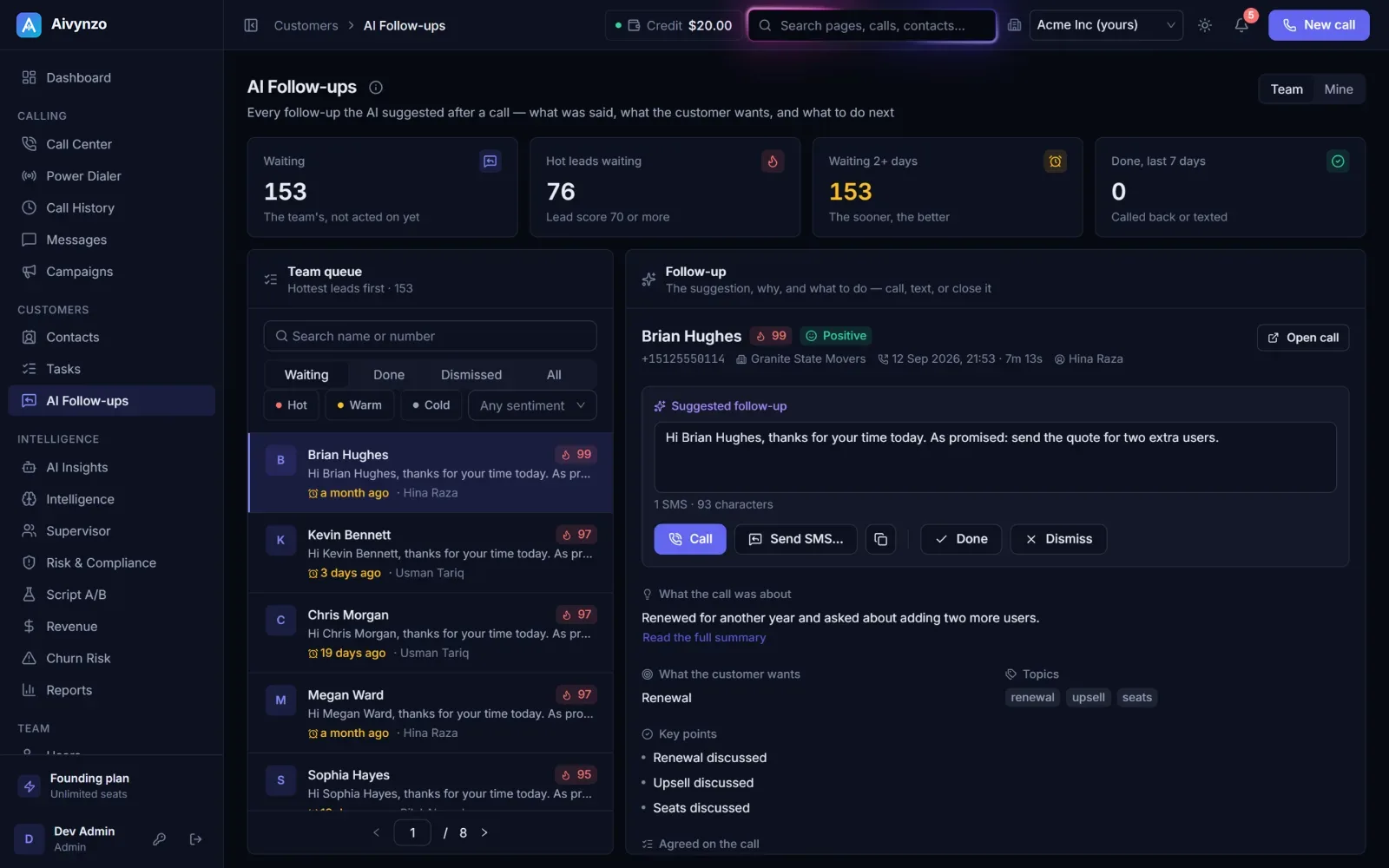
After every call the AI suggests the follow-up message: what to say, why, and what the customer wants. The agent reads it, changes what needs changing, and sends it by text or e-mail — or calls back — in one click.
Nothing goes out by itself: a suggestion waits for the agent.
Work the queue from the top
Follow-ups wait in a queue with the hottest leads first, by lead score, and each shows how long it has been waiting. A manager sees the whole team's queue; an agent sees their own. The rule is simple: nothing should wait two days.
Use templates for what you send every day
Some follow-ups are the same every time — a thank-you, a missed-call text, the quote e-mail. Write them once as SMS or e-mail templates; the contact's name, company and the agent are filled in for you. A template can be sent by hand, or set to go out by itself a set time after every call.
Do not forget the calls nobody answered
A missed incoming call is a customer who wanted to talk. Aivynzo turns it into a call-back task for the agent who last spoke to the caller, due the same day.